



Please Leave Us A Message
Privacy statement: Your privacy is very important to Us. Our company promises not to disclose your personal information to any external company with out your explicit permission.

Mr. Andy
What can I do for you?


Top 10 Rice Cooker Brands in the Kitchen Appliance Industry
Home appliances play an essential role in everyday life, offering convenience and improving overall quality of living. With continuous technological advancement, a number of reliable and well-established appliance brands have emerged. Among them, the rice cooker (also known as an electric rice cooker) is a core kitchen appliance, allowing households to prepare fresh, flavorful rice efficiently and consistently. However, rice cookers are also among the appliances most closely associated with...

15 Cups Large Capacity Drum Rice Cooker: Hotel Sourcing
15 Cups Large Capacity Drum Rice Cooker: Hotel Sourcing Elecpro's 15 Cups Large Capacity Drum Rice Cooker offers a perfect combination of functionality and design, making it an ideal choice for both commercial kitchens and households. With its ability to prepare large quantities of rice quickly and evenly, it’s becoming increasingly popular in hotel and restaurant settings. Let's dive into why this product is an excellent option for international sourcing, especially for large-scale procurement...

Dog Grooming Tub with Right Door Opening: Pet Salon Sizing
Dog Grooming Tub with Right Door Opening: Pet Salon Sizing Introduction to the Elecpro 38-inch Stainless Steel Dog Grooming Tub Elecpro, a leading manufacturer with over 31 years of experience in OEM/ODM production, presents the 38-inch Stainless Steel Dog Grooming Tub (Model: PYG-R38). Specifically designed for pet grooming salons, veterinary hospitals, and pet parents, this tub is a top-tier solution for efficient pet bathing. With a robust build and user-centric features, the PYG-R38...

Stainless Steel Water Alcohol Distiller: Brew Biz Compliance
Stainless Steel Water Alcohol Distiller: Brew Biz Compliance For global procurement managers in the beverage, food service, and home brewing sectors—including large brand distributors, OEM/ODM manufacturers, small retailers, and commercial brewers—regulatory compliance and material safety are non-negotiable when sourcing stainless steel water alcohol distillers. With tightening global standards (e.g., FDA, LFGB) and rising demand for small-batch brewing solutions, Elecpro Electrical Appliances...

4L Electric Pressure Cooker Household Use: Wholesale Deals
4L Electric Pressure Cooker Household Use: Wholesale Deals User-friendly household kitchen appliances continues to rise, the 4L electric pressure cooker has emerged as a staple product for families, small hotels, and light commercial use. For procurement managers—including large brand distributors, OEM/ODM manufacturers, small retailers, and industrial buyers—sourcing a reliable, certified, and cost-effective model is critical to maintaining market competitiveness and meeting end-user...

Commercial Stainless Steel Work Table with Backsplash: NSF Check
Commercial Stainless Steel Work Table with Backsplash: NSF Check As a leading manufacturer in commercial kitchen equipment, Elecpro Electrical Appliances Sales Co., Ltd brings over 30 years of OEM/ODM expertise to high-quality, versatile products like the Commercial Stainless Steel Table with Backsplash. For B2B buyers—be it large distributors, OEM/ODM partners, or traditional retail chains—this guide provides a comprehensive evaluation covering product specs, hygiene compliance, procurement...

Stainless Steel Dog Grooming Tub for Large Dogs: B2B Sizing
Stainless Steel Dog Grooming Tub for Large Dogs: B2B Sizing Audience: Purchasing managers, distributors and OEM/ODM partners in the US & Europe seeking durable, certificated pet grooming equipment for salons, veterinary clinics, hotels and multi-site rollouts. This guide helps you evaluate the Stainless Steel Dog Grooming Tub for Large Dogs from a sourcing, sizing and compliance perspective. Executive summary Elecpro’s stainless-steel dog grooming tubs (available in 34", 38" and 50" sizes)...

High Quality Smart Rice Cooker: Distributor OEM Guide
High Quality Smart Rice Cooker: Distributor OEM Guide The High Quality Smart Rice Cooker (Model: NDC10-330) from NICEDAY represents the next generation of intelligent kitchen appliances. Designed and manufactured in Elecpro’s ISO-certified production base in Foshan, China, this smart appliance integrates precise cooking technology, multi-functional usability, and advanced heat management. It serves not only modern households but also B2B buyers seeking OEM/ODM opportunities for retail chains,...

Cotton Candy Machine For Home Use: Wholesale Sourcing Tips
Cotton Candy Machine For Home Use: Wholesale Sourcing Tips With the growing popularity of home entertainment appliances, cotton candy machines for home use have become a hot commodity in both retail and wholesale markets. Whether you’re a distributor, OEM/ODM manufacturer, or retail buyer in Europe and North America, understanding the sourcing strategies for cotton candy makers is critical to ensuring quality, reliability, and profitability. Understanding Cotton Candy Machines for Home...

20 Bar Professional Espresso Maker: Café Buyer’s Choice
20 Bar Professional Espresso Maker: Café Buyer’s Choice Brand: Elecpro | Company: Elecpro Electrical Appliances Sales Co., Ltd Elecpro presents the 20 Bar Professional Espresso Maker —a robust, high-performance espresso solution crafted for both home users and professional café buyers. With premium stainless steel construction, Italian ULKA pump, integrated milk frother, and advanced temperature control, this machine is the café buyer’s choice for quality, durability, and efficiency. Overview...

24" x 30" NSF Commercial Kitchen Prep Counter: Durability Check
24" x 30" NSF Commercial Kitchen Prep Counter: Durability Check As a seasoned OEM/ODM manufacturer, Elecpro Electrical Appliances Sales Co., Ltd—founded in 1993—brings over three decades of expertise to delivering top-tier kitchen equipment. Our 24" x 30" NSF Commercial Kitchen Prep Counter epitomizes our commitment to durability, hygiene, and functionality—catering to B2B buyers across Europe and North America. Overview of the 24″ x 30″ NSF Prep Counter This stainless steel table features a...

Electric Pressure Cooker With 12 Preset Menus: B2B Deals
Electric Pressure Cooker With 12 Preset Menus: B2B Deals Elecpro Electrical Appliances Sales Co., Ltd, established in 1993, is a global leader in the research, development, and production of household kitchen appliances and intelligent commercial kitchen equipment. With over 31 years of industry expertise, the company exports to more than 100 countries and collaborates with leading brands such as DeLonghi, Oster, COSORI, and Cuisinart. In this article, we explore the business value of the...

13.2 Gal Alcohol Still with Circulating Pump: Brew Biz Sourcing
13.2 Gal Alcohol Still with Circulating Pump: Brew Biz Sourcing Elecpro Electrical Appliances Sales Co., Ltd, established in 1993, is a global leader in household and commercial kitchen appliances. With over 30 years of industry experience, Elecpro combines advanced research, robust production capacity, and international certifications to deliver high-quality solutions to clients in more than 100 countries. Overview of 13.2 Gal Alcohol Still The 13.2 Gal Alcohol Still with Circulating Pump is a...

3L Korean Low Sugar Electric Rice Cooker: OEM Options
3L Korean Low Sugar Electric Rice Cooker: OEM Options Elecpro Electrical Appliances Sales Co., Ltd., a global leader in smart kitchen appliances with 30+ years of experience, introduces the 3L Korean Low Sugar Electric Rice Cooker (RC30D42-A). This innovative appliance combines traditional Korean cooking methods with modern sugar-reducing technology to meet growing consumer demand for healthier lifestyles. Tailored for both households and professional OEM/ODM partners, this rice cooker bridges...

Commercial Cotton Candy Machine with Cart: Party Biz Boost
Commercial Cotton Candy Machine with Cart: Party Biz Boost For catering entrepreneurs, amusement park operators, and event organizers in the U.S. and Europe, a Commercial Cotton Candy Machine with Cart can be a game-changer. With high efficiency, easy transport, and durable design, this piece of equipment offers both flexibility and profitability. In this article, we’ll explore sourcing tips, market insights, and Elecpro’s competitive edge in supplying high-quality cotton candy machines...

10 Cup Programmable Drip Coffee Maker: Office Sourcing Tips
10 Cup Programmable Drip Coffee Maker: Office Sourcing Tips In today’s fast-paced office environments, a reliable coffee maker is no longer just a kitchen appliance—it is a productivity tool. The 10 Cup Programmable Drip Coffee Maker from Elecpro is engineered to meet the needs of busy workplaces, offering high-capacity brewing, programmable convenience, and long-lasting durability. For international sourcing managers, distributors, and OEM/ODM partners, selecting the right model means...
6 Cup brew Drip Coffee Maker with Grinder: B2B Buyer’s Guide
6 Cup brew Drip Coffee Maker with Grinder: B2B Buyer’s Guide Latest Technology Trends in Drip Coffee Makers The global drip coffee maker market is evolving rapidly, with three key tech trends shaping B2B sourcing: smart programmability, energy efficiency, and integrated grinding systems. Modern models like Elecpro’s 6 Cup brew Drip Coffee Maker with Grinder now feature 24-hour preset timers, allowing commercial users (cafés, offices, hotels) to automate brewing and reduce labor costs....
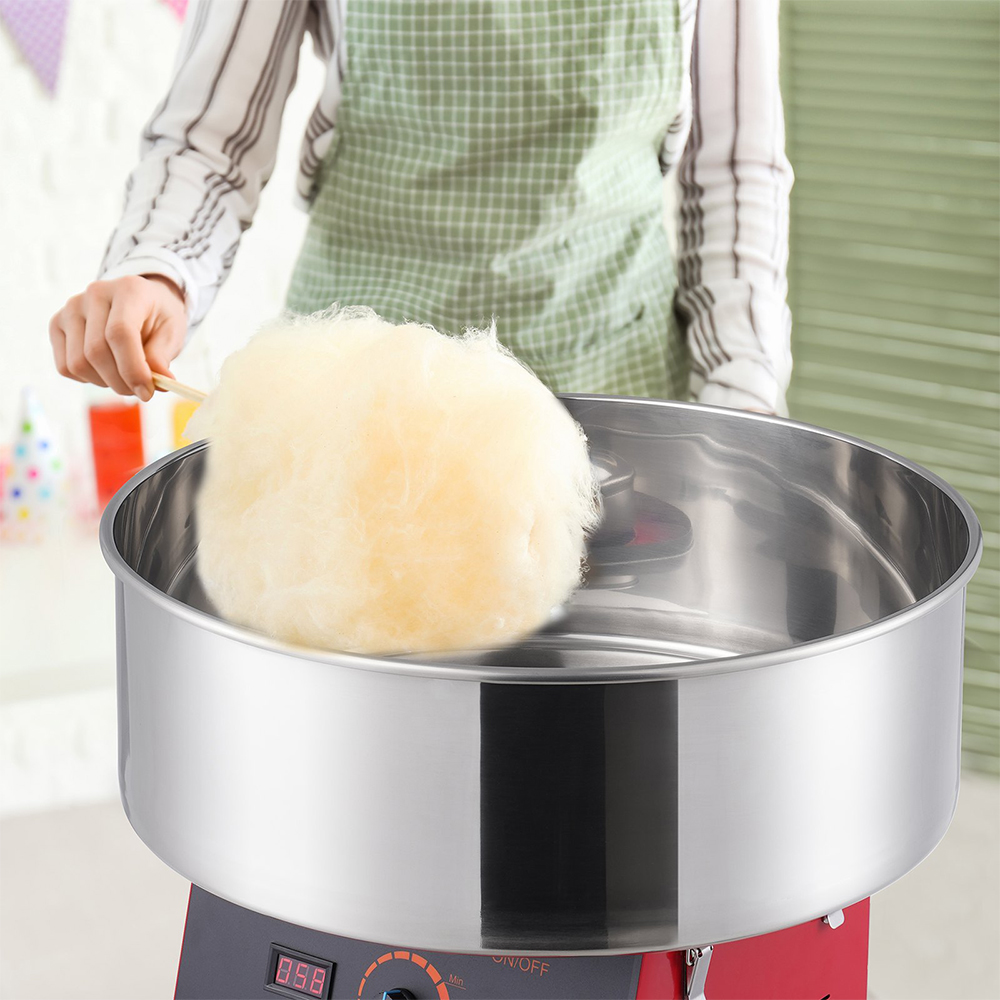
Regional preferences for cotton candy density (fluffy vs. compact) vary significantly across cultures, influenced by culinary traditions, event types, and consumer expectations. Below is an analysis of these differences based on global trends and cultural contexts: 1. North America: Fluffy and Nostalgic In the U.S. and Canada, cotton candy is strongly associated with carnivals, fairs, and childhood nostalgia. Consumers prefer extremely fluffy textures, which align with the classic...

The relationship between the sugar hopper capacity (e.g., 1,600 grams) and refill frequency in an electric cotton candy machine depends on two primary factors: production rate and sugar consumption per serving. Hopper Capacity and Refill Intervals A larger hopper capacity reduces refill frequency. For instance, a 1,600-gram hopper can produce approximately 50–60 standard cotton candies (assuming 25–30 grams of sugar per serving) before requiring a refill. In contrast, smaller hoppers (e.g.,...
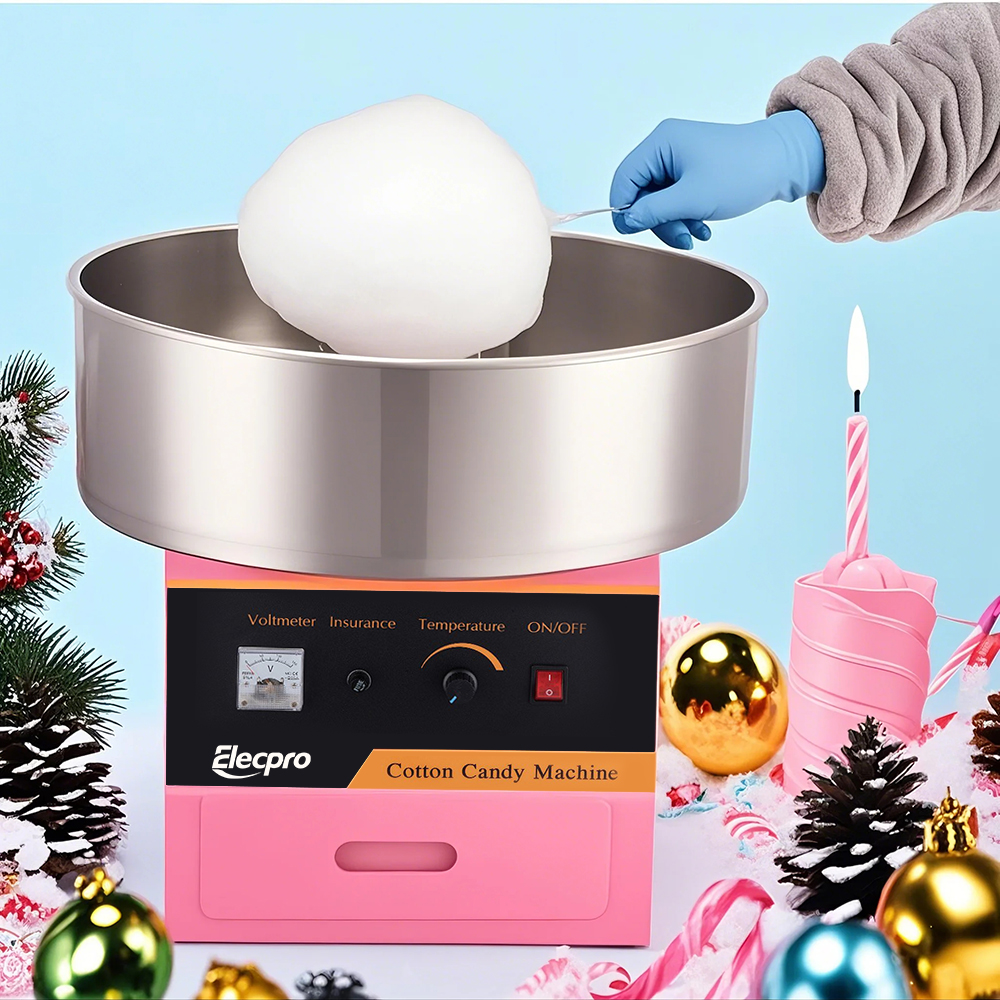
The automated vending model for electric cotton candy machines in amusement parks and shopping malls operates on a high-margin, low-overhead structure. Here’s a breakdown of the profit model: 1. Revenue Streams Per-Sale Profit: Each serving costs 0.10–0.20 in raw materials (primarily sugar) but sells for 1–10, yielding a gross profit margin of 80–90%. Volume Sales: High-traffic locations (e.g., amusement parks, malls) can generate 30–50 sales daily, translating to 90–500/day (at 3–10 per...
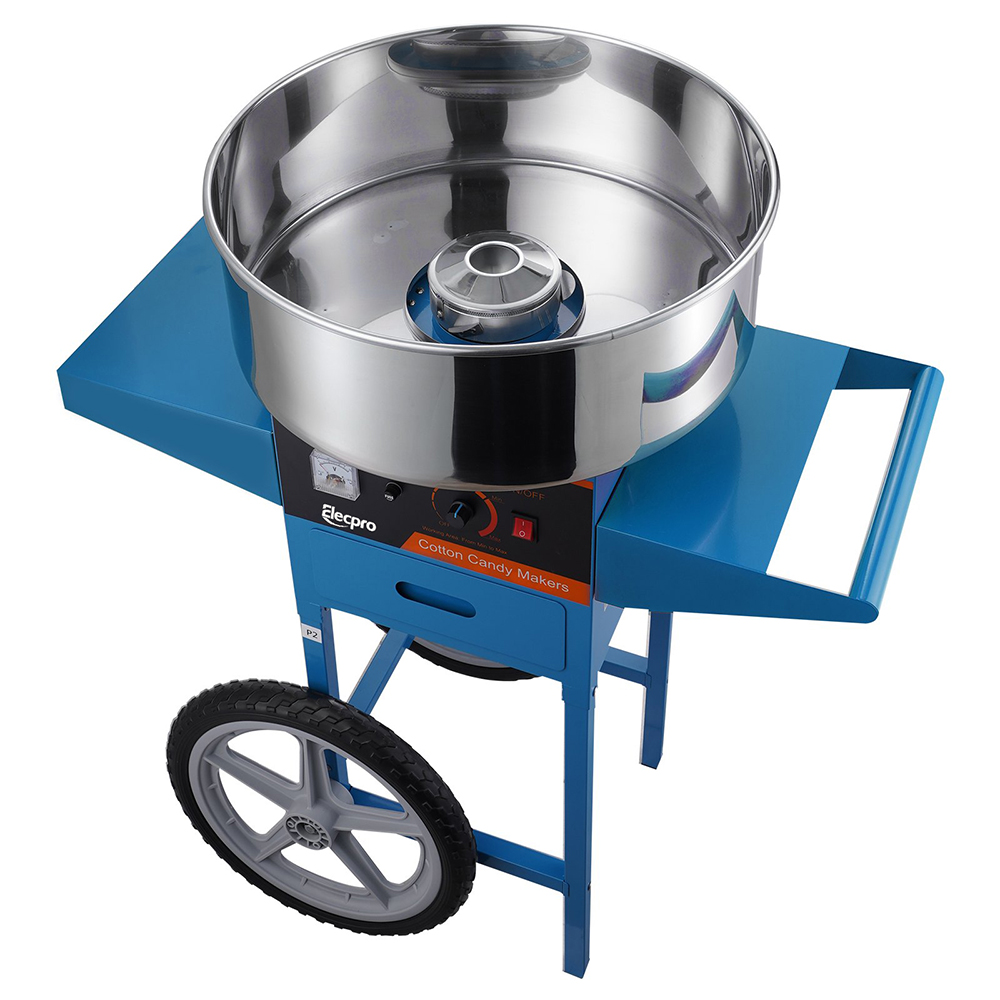
Electric cotton candy machines demonstrate versatile applicability across both home and commercial settings, validated by their design features and operational adaptability. Here’s a breakdown of their multi-scenario suitability: 1. Home Gatherings Portability & Compact Design: Lightweight models (e.g., 4.2–10 lbs) with suction-cup bases or foldable components are ideal for kitchens or backyard parties. Their compact size ensures easy storage and setup on countertops or small...
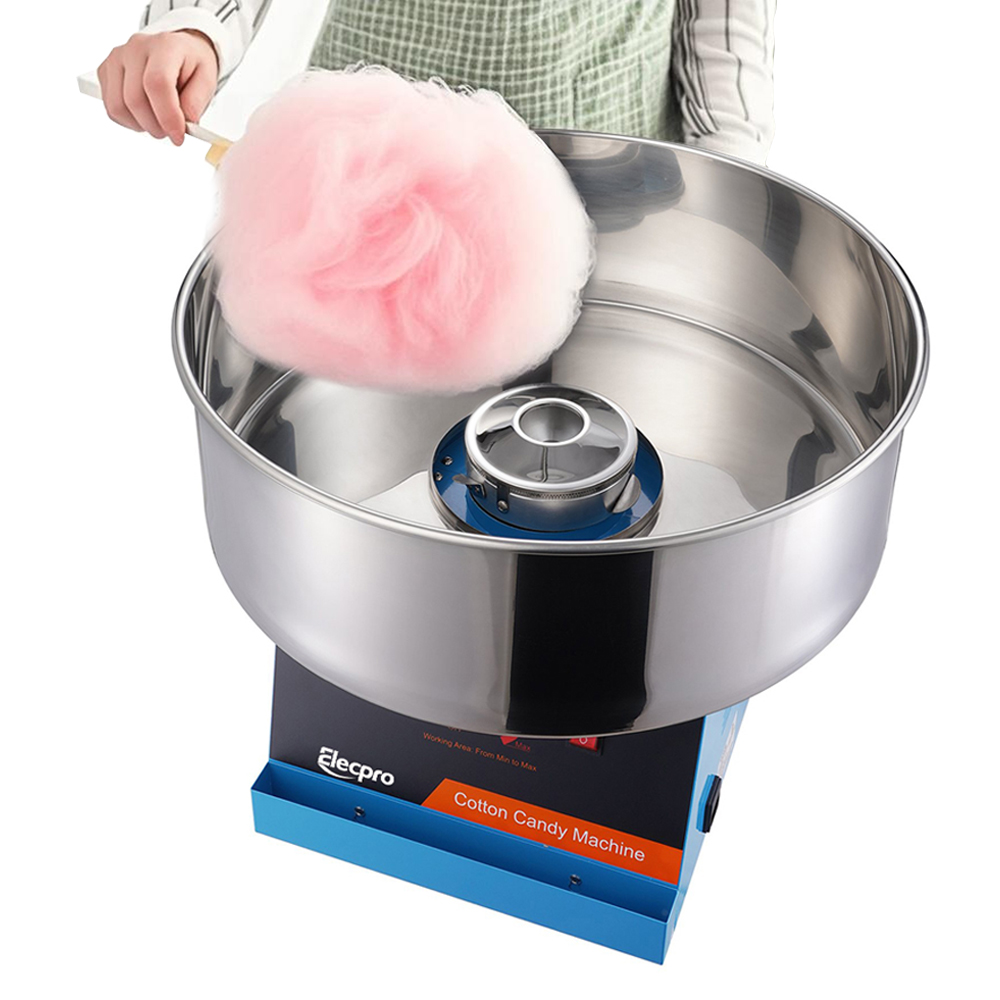
Does the electric cotton machine support an external syrup pump to achieve multi-flavor mixing?
Yes, certain electric cotton candy machines can support external syrup pumps to enable multi-flavor mixing, though this functionality depends on the machine’s design and intended use. Here’s a detailed analysis: 1. Technical Feasibility Integrated Flavor Systems: Some commercial-grade cotton candy machine electric models feature modular designs that allow integration with syrup pumps or flavor injectors. These systems can automatically dispense flavored syrups into the spinning head, enabling...
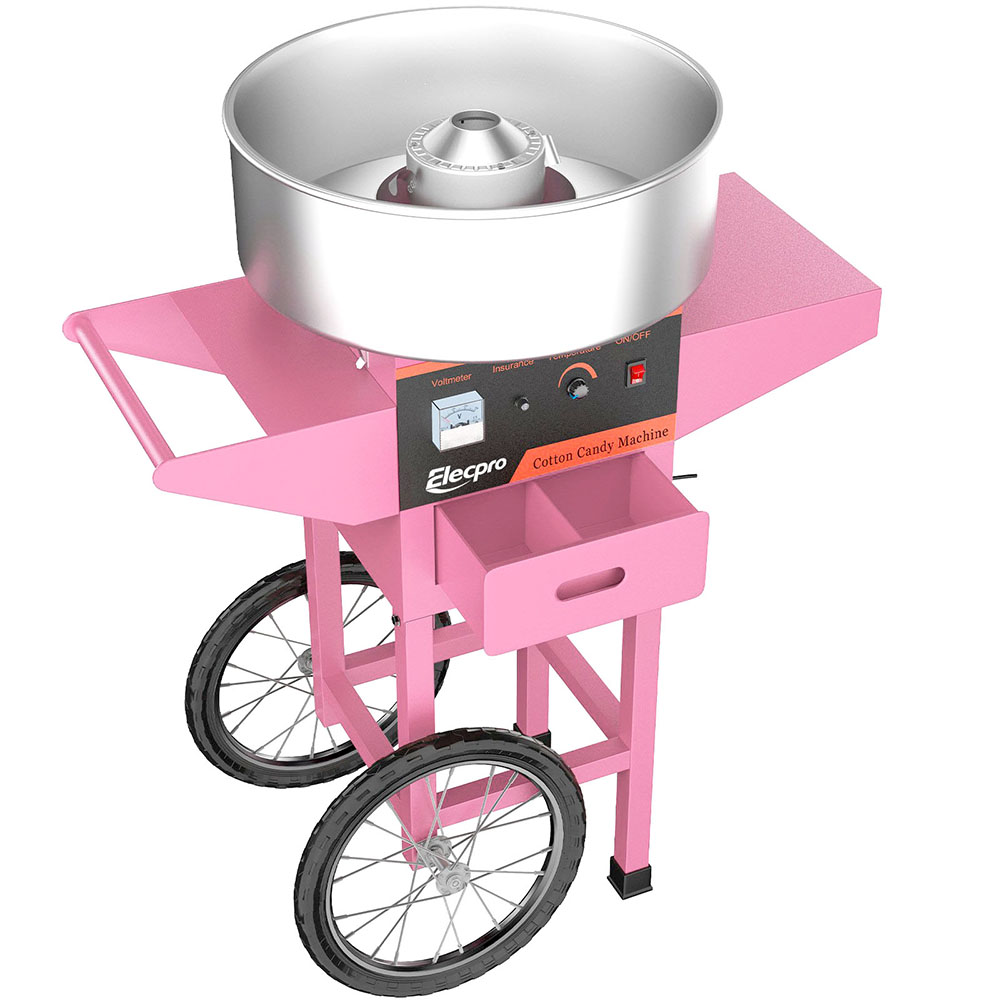
Balancing portability and stability in the design of electric cotton candy machines with carts involves strategic engineering choices and user-centric features. Here’s how manufacturers address this challenge: Material Selection: Lightweight yet durable materials like stainless steel and aerospace-grade aluminum are commonly used. These ensure structural integrity while reducing overall weight. For example, the elecproco Electric Cotton Candy Machine features a stainless steel bowl and cart...
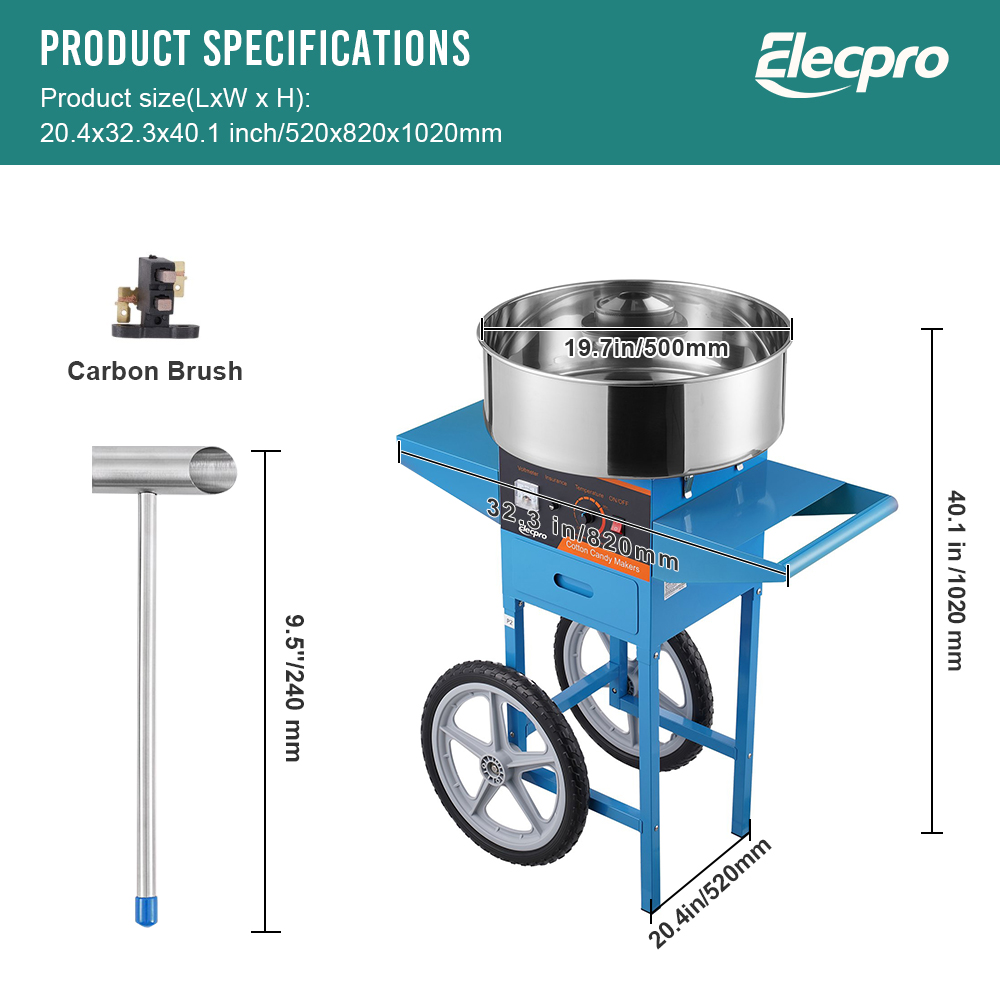
The sugar conversion rate in Electric Cotton Candy Machines is significantly affected by sugar types (hard candies vs. fruit-based sugars), primarily due to differences in melting behavior, viscosity, and sugar crystal structure. Here’s a detailed breakdown: 1. Hard Candies Higher Conversion Efficiency: Hard candies (e.g., lollipops, rock sugar) melt uniformly at 245–250°C (optimal for most machines) and form fine, dry strands due to their low moisture content (<2%), resulting in 85–95%...


Privacy statement: Your privacy is very important to Us. Our company promises not to disclose your personal information to any external company with out your explicit permission.
Fill in more information so that we can get in touch with you faster
Privacy statement: Your privacy is very important to Us. Our company promises not to disclose your personal information to any external company with out your explicit permission.